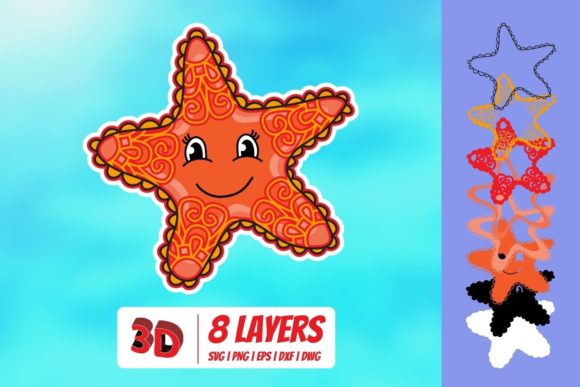
3D Starfish SVG
In the realm of digital crafting and small-scale manufacturing, the transition from a conceptual idea to a physical product relies heavily on the precision and versatility of your source files. The 3D Starfish SVG is not merely a decorative graphic; it is a functional asset designed to bridge the gap between digital design software and physical cutting machines. For professionals, hobbyists, and entrepreneurs alike, understanding how this specific vector file integrates into existing workflows is crucial for maintaining efficiency and ensuring high-quality output.
The term "3D" in this context refers to the visual depth achieved through layered cutting or strategic placement, rather than volumetric geometry. This distinction is vital for users planning their production runs. Whether you are creating custom home decor, educational materials, or branded merchandise, the ability to manipulate layers and shadows allows for a more sophisticated final product compared to flat, single-layer cuts. The 3D Starfish SVG download typically arrives as a comprehensive package containing multiple file formats—SVG, DXF, PNG, and EPS—each serving a distinct purpose within the broader creative pipeline.
Understanding File Formats and Software Compatibility
One of the primary friction points in digital crafting is software incompatibility. A file that works perfectly in one ecosystem may be unusable in another without significant rework. The inclusion of multiple formats in the 3D Starfish SVG download addresses this challenge directly, allowing users to select the optimal format based on their specific hardware and software stack.
The core component, the SVG (Scalable Vector Graphics) file, is the industry standard for most modern cutting machine software. It supports complex paths, layers, and color separation, which are essential for executing the multi-layered design required for the 3D effect. This format is fully compatible with:
- Cricut Design Space: Ideal for users of Cricut Maker and Explore series machines. The layering information is preserved, allowing you to assign different colors or materials to each starfish segment before sending it to the cutter.
- Silhouette Studio Designer Edition: Offers robust vector editing capabilities. Users can easily adjust node points if minor tweaks to the starfish shape are needed for specific material constraints.
- Make the Cut (MTC): A powerful tool for advanced users who need precise control over cut lines and registration marks.
- Sure Cuts A Lot (SCAL): Known for its speed and compatibility with various brands of cutters, SCAL handles the intricate paths of the starfish design efficiently.
- Brother ScanNCut Canvas: Ensures seamless integration for Brother machine owners, preserving the vector data for clean cuts on vinyl, cardstock, or fabric.
For users operating on a budget or using older hardware, the DXF (Drawing Exchange Format) provides a reliable alternative. Specifically designed for Silhouette Basic Edition, the DXF file strips away some of the advanced layering metadata found in SVGs but retains the geometric integrity of the cut lines. While it may require manual reassembly of layers in the software interface, it ensures that even entry-level setups can produce the 3D starfish design without purchasing premium software upgrades.
The EPS (Encapsulated PostScript) file serves the graphic design professional. Compatible with CorelDraw, Inkscape, and Adobe Illustrator, this format allows for extensive manipulation outside the cutting software environment. If you need to incorporate the starfish into a larger logo, brochure, or marketing campaign before sending it to a cutter, the EPS format ensures that the vector quality remains intact at any scale. This is particularly useful for business owners who need to maintain brand consistency across print and craft mediums.
Finally, the PNG (Portable Network Graphics) file with a transparent background acts as a visual reference. At 300 DPI, it provides a high-resolution raster image suitable for previewing the design, creating mockups for client presentations, or printing directly via inkjet or laser printers. While PNGs cannot be used by cutting machines to guide blades, they are indispensable for visualization and quality control during the planning phase.
Workflow Integration and Production Planning
Integrating the 3D Starfish SVG into a project requires more than just opening the file; it demands a strategic approach to material selection and assembly. The "3D" aspect implies that the final result is an aggregation of parts. Therefore, the workflow must account for alignment, adhesion, and structural stability.
Preparation and Material Selection
Before initiating the cut, consider the end-use of the starfish. If it is intended for wall art, heavier cardstock or foam board might provide the necessary rigidity. For jewelry or keychains, thin adhesive vinyl or chipboard would be more appropriate. The choice of material affects how the layers interact; thicker materials may require spacers or double-sided tape to prevent the layers from merging into a single block, thereby losing the shadow effect that defines the 3D look.
Software Setup and Layer Management
When importing the SVG into your chosen software, verify that all layers are present and correctly named. In Cricut Design Space or Silhouette Studio, you should see separate groups for each depth level of the starfish. Assign distinct colors to each layer to visually distinguish them during the cutting process. This color-coding is critical for error prevention, especially when cutting multiple designs simultaneously. Ensure that the "cut" lines are set correctly and that no unnecessary welds or unions have been applied that could distort the delicate curves of the starfish arms.
Machine Calibration and Testing
Consistency is key in production. Before committing to expensive materials, perform a test cut on scrap paper or low-cost vinyl. Check for clean cuts, especially at the inner corners where the blade might struggle or leave debris. Adjust the blade depth and pressure settings if necessary. For the 3D Starfish SVG, precise cuts are non-negotiable; even a millimeter of deviation in one layer can misalign the entire assembly, ruining the illusion of depth.
Assembly and Quality Control
The true value of the 3D Starfish SVG is realized during the assembly phase. This is where the digital file transforms into a tangible object. Efficient assembly requires an organized workspace and a methodical approach to layering.
Alignment Strategies
To ensure perfect alignment, use registration marks if your machine supports them, or employ a light box to trace the outline of the base layer onto subsequent layers. Many creators find it helpful to temporarily adhere the layers together using low-tack painter’s tape before applying permanent adhesive. This allows for fine-tuning the position of each arm and segment. Once satisfied, replace the temporary tape with a strong, clear-drying glue or double-sided foam tape for added dimension.
Long-Term Usability and Archiving
From a business perspective, owning the source files in multiple formats offers long-term flexibility. As your equipment evolves, you will not be locked into a single ecosystem. The ZIP folder structure keeps all assets organized, making it easy to retrieve the correct format for future projects. Furthermore, because the SVG and EPS files are vector-based, they can be scaled up for large-format banners or down for tiny embellishments without loss of quality. This scalability maximizes the return on investment for the initial purchase.
Adaptability in Marketing and Education
Beyond crafting, the 3D Starfish SVG has utility in educational and marketing contexts. Educators can use the PNG or printed versions to teach concepts related to marine biology, symmetry, and geometry. Marketers can use the EPS file to create cohesive branding elements for beach-themed events or summer promotions. The versatility of the asset means it can serve multiple roles within a business workflow, reducing the need to commission new graphics for every new campaign.
Conclusion on Practical Application
The 3D Starfish SVG download represents a well-rounded solution for digital crafters seeking to add depth and professionalism to their work. By providing access to SVG, DXF, PNG, and EPS formats, it accommodates a wide range of software preferences and skill levels. Success with this asset depends less on the file itself and more on the user’s ability to integrate it into a disciplined workflow—one that prioritizes preparation, precise calibration, and careful assembly. When executed correctly, the result is a visually striking piece that demonstrates both technical proficiency and creative vision.
For those looking to streamline their production process, treating the 3D Starfish SVG as a modular component rather than a static image is the most effective strategy. By leveraging the strengths of each file format and adhering to best practices in material handling and layer management, creators can consistently produce high-quality results that stand out in a crowded marketplace. Whether you are a seasoned pro or just starting out, this asset offers a practical pathway to enhancing your craft with minimal friction and maximum impact.